


This post is also available in:

NahWertVoll: Bio-regional Value Creation and Healthy Eating in Institutional Food Service, Using Student Dining Services in Eastern Brandenburg as an Example
The aim of the “NahWertVoll” project is to use the example of the Studierendenwerk Ost:Brandenburg to show how a healthy diet can be promoted among students. At the same time, the Studierendenwerk is to act as a driving force for the development of regional organic value chains in a region. The model region comprises (East) Brandenburg, where the Studentenwerk operates several communal catering facilities.
The project will initially analyze the potential for the participating institutions to implement the DGE quality standard for catering in companies, authorities and universities, the use of regional organic food and the avoidance of food losses, develop concrete concepts for implementation, test these in selected institutions, develop them further and, if possible, consolidate them.
The aim is to create an exchange and reflection space for communal catering in Brandenburg so that relevant multipliers and companies in the region can network .
The target groups are the guests of the canteens and cafeterias of the Studentenwerk, the employees responsible for catering, as well as regional producers and multipliers at regional and national level.
As part of the project, we will increase the proportion of organic and regional foods and use more fresh and seasonal foods. You will therefore benefit from an overall healthier range of food in the canteen.
The joint partner is the Eberswalde University for Sustainable Development, which will support quality assurance and derive recommendations for action to promote sustainable nutrition for stakeholders in the region and for other model regions. The project results will also be available for future projects.
October 16 is World Food Day! For us, this is a great opportunity to take a closer look at what’s on our plates and where it comes from.
Under the motto “Innovate Now. Nourish Tomorrow,” all of our cafeterias are featuring two regional favorites:
With Ryce —a rice alternative made from organic rye from Brandenburg—you’ll get a free milk-based Ryce dessert.
The first course is “Lablabi” made with organic chickpeas from Gut Friedersdorf in Brandenburg.
Rye and chickpeas both thrive in dry conditions and on poor soils—ideal conditions for promising future cultivation in Brandenburg.
The project was launched in September 2024 and runs until August 2027.
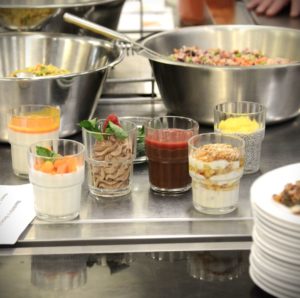
During the semester break, the student dining halls run by the Studierendenwerk Ost:Brandenburg were transformed into small culinary labs. Together with the Kantine Zukunft Berlin (dining halls), the kitchen staff tested new ideas using organic ingredients. Each workshop has its own focus topic, which the kitchens determine themselves in advance. This time, the focus was on whole-grain rice, creative salads with legumes and grains, and bread. The goal: to overcome challenges through collaboration and hands-on experience and to develop new, tasty, and healthy dishes.
It quickly became clear that whole-grain rice is not a one-size-fits-all product. The variety, harvest year, and preparation method all determine its flavor and texture. Instead of rigid cooking times in a convection oven, a delicate touch is required. And that is exactly what the workshops teach: how to enrich the menu with fresh and regional ingredients.
The workshops are part of the “NahWertVoll” project and take place at all our locations. The content of the workshops varies depending on the needs of the kitchen teams and is an important part of the project. With the support of “Kantine Zukunft,” the kitchen teams learn how to navigate the changes in the kitchen as they work toward increasing the proportion of organic ingredients and using more regional products.